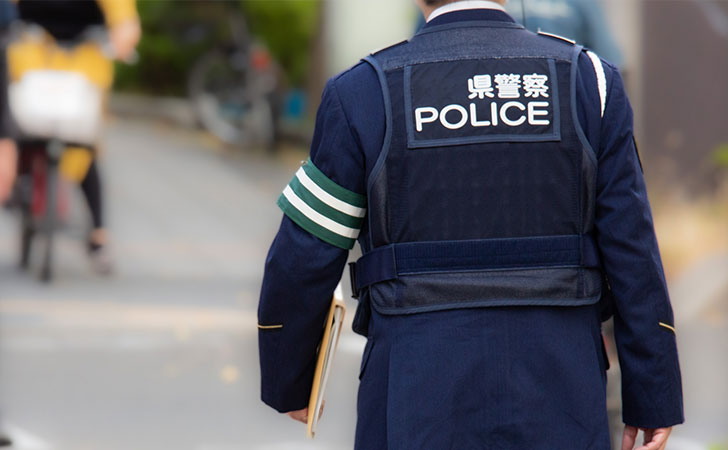
“NordVPN Claims a No-Logs Policy, But Can the Police Track It?”
Many people may have this question.
NordVPN follows a strict no-logs policy, meaning it does not store users’ browsing or activity history.
Additionally, NordVPN is headquartered in Panama, a country without data retention laws, which significantly enhances user anonymity.
However, an important concern remains: Is NordVPN anonymous enough to evade law enforcement detection?
In this article, we will explain whether NordVPN can be traced by the police and the reasons why it remains untraceable.
目次
Reasons Why the Police Can Track Online Crimes
The internet is a space where anyone can share information anonymously.
However, anonymity does not mean immunity—if someone commits a cybercrime, the police can track them down and make an arrest.
So, how do law enforcement agencies identify individuals based on their online activities?
Let’s take a look at the process and steps the police follow to trace an individual’s identity.
1. Request for IP Address Disclosure

First, the police investigate the IP address to identify the individual.
An IP address is a unique number assigned to internet-connected devices such as computers, tablets, and smartphones.
| Example of an IP Address | IPv4:192.168.0.1 IPv6:2001:0db8:85a3:0000:0000:8a2e:0370:7334 |
When using the internet, we engage in activities such as:
- Visiting websites
- Posting on social media or forums
- Downloading videos or music
While website administrators cannot see personal details like name, address, or contact information, they can still record:
- Your IP address
- Timestamps of your activity
For example, if you post on a forum, the system may log:
“A post was made on [date & time] from IP address 192.168.0.1.”
The police request the disclosure of IP addresses from website or service administrators.
If the administrator refuses to provide this information due to privacy obligations, the police can obtain the IP address through legal procedures, such as a sender information disclosure request.

For example, in the case of X (formerly Twitter), a sender information disclosure request would be filed with the Tokyo District Court.
2. Identifying the Individual from the IP Address
Even if the police obtain the suspect’s IP address, they cannot immediately determine their identity.
This is because an IP address only reveals:
- Country and city name
- Internet service provider (ISP) (e.g., OCN, SoftBank, Plala, Biglobe, So-net)
However, ISPs keep logs that record which subscriber was using a specific IP address at a given date and time (e.g., “On [date & time], IP address 192.168.0.1 was assigned to a specific user.”)
To identify the user, the police request the ISP to disclose personal information such as name, address, and contact details.
However, ISPs do not voluntarily release this information, as their subscribers are their valued customers.
To obtain the information legally, the police must prove that the case meets the requirements of the Provider Liability Limitation Act.
Once these conditions are met, the court issues an order to the ISP to disclose the subscriber’s personal details through a sender information disclosure request.
However, ISPs only retain subscriber logs for 3 to 6 months.
If more time passes, the logs may no longer exist, making it difficult to identify the perpetrator.
Using a VPN Makes It Difficult for the Police to Identify Individuals
When you connect to the internet via a VPN, it becomes difficult for law enforcement to trace your identity.
A VPN (Virtual Private Network) enhances security and privacy by encrypting internet traffic.
Encryption is achieved by:
- Creating a virtual tunnel between the device and the VPN server
- Encapsulating and encrypting all data sent from the device
This provides benefits such as preventing data theft and reducing the risk of malware infections when using public Wi-Fi networks in restaurants, cafés, and train stations.
In Japan, the United States, Europe, and most other countries, VPN usage is legal.
In fact, large corporations and government agencies widely use VPNs to enhance security.
Hide Your Real IP Address
The main reason why a VPN makes police tracking difficult is that it hides your real IP address.
When using a VPN, all website and service access is routed through the VPN server.
As a result, the IP address visible to website administrators is actually the VPN server’s IP address, not your real one.
This means you can browse the web without revealing your true IP address to websites and online services.
However, the VPN server itself still knows your real IP address.
If law enforcement conducts an investigation into the VPN provider, they may be able to retrieve the real IP address and identify the user.
Depending on the VPN service provider, user information may be easily handed over to the police, so choosing a reliable VPN is crucial.
With NordVPN, the Police Cannot Identify You

With NordVPN, you can significantly improve your privacy to the point where law enforcement cannot trace your identity.
NordVPN is the world’s No.1 VPN service, with over 14 million users globally.
It operates more than 6,800 VPN servers in 113 countries, including over 200 servers in Japan.
Here are the reasons why NordVPN cannot be tracked by the police:
Not Subject to Data Retention Laws
NordVPN is headquartered in Panama, a country without data retention laws that require storing or providing user activity records.
This means that even if law enforcement or government agencies request user data, NordVPN has the legal right to refuse disclosure.
Additionally, users should be aware that countries belonging to the Five Eyes, Nine Eyes, and Fourteen Eyes alliances actively monitor and share internet activity records at the government level.
| Five Eyes Alliance | United States, United Kingdom, Australia, Canada, New Zealand |
| Nine Eyes Alliance | Five Eyes Alliance Countries + Denmark, France, Netherlands, Norway |
| Twelve Eyes Alliance | Nine Eyes Alliance Countries + Germany, Belgium, Italy, Sweden, Spain |
In addition to the countries listed above, Japan, South Korea, Singapore, and Israel have also been confirmed to share information with the Fourteen Eyes Alliance.
No Logs Are Stored
NordVPN strictly adheres to a no-logs policy.
The no-logs policy means that NordVPN does not store any activity records, such as:
“A user accessed the internet on [date & time] using IP address 192.168.0.1.”
Even if the police were to conduct a forced investigation, NordVPN would have no user data to provide, making it impossible to trace an identity through an IP address.
NordVPN’s no-logs policy is clearly stated on its official website.
NordVPN Does Not Keep Logs of Your Online Activity
Concerned that NordVPN might be recording your data? No need to worry. We provide a no-logs VPN service, meaning we do not store any data related to your online activity.
Since no data is saved, there is nothing to verify or share with third parties.
Source: NordVPN – No-Logs VPN Service
Additionally, NordVPN’s no-logs policy has been independently verified through four separate audits conducted by the Big Four global auditing firms.
Always-On VPN Feature
NordVPN offers an always-on VPN feature, ensuring continuous protection.
Your anonymity and privacy are safeguarded only while connected to the VPN.
If the VPN connection is accidentally interrupted, your real IP address could be exposed to websites and online services.
One of the most important features for preventing this risk is the Kill Switch.
- If the VPN connection unexpectedly drops, the Kill Switch automatically blocks internet access.
- This ensures that there is no moment, even for a second, when your device is not protected by the VPN.
Additional Features to Enhance Anonymity
NordVPN offers features that provide even greater anonymity than a standard VPN.
If you seek the highest level of privacy and anonymity, consider using the following features.
| Double VPN | A specialized server that encrypts your connection twice using double VPN encryption. By routing traffic through two VPN servers, it enhances security and privacy. |
| Onion Over VPN | A specialized server that hides your IP address to enhance anonymity. In addition to a VPN connection, it routes traffic through the open-source software “Tor” (The Onion Router) for added security. |
NordVPN routes traffic through its own DNS servers, effectively preventing DNS leaks.
Frequently Asked Questions (Q&A) About VPNs and Police Tracking
Below, we have compiled a list of common questions and answers regarding whether the police can track VPN users.
Q: Can the Police Track Me if I Use a Free VPN?
Many free VPNs store user logs, making it highly likely that the police can track your activity.
Even if a VPN claims to have a “no-logs policy,” some providers use this term to mean “no logs except for certain data,” which may still allow tracking.
For example, Tsukuba University’s VPN service “VPN Gate” explicitly states that it logs the following data for at least three months:
- Date and time of the record
- VPN server ID, IP address, and hostname
- Action type (connection or disconnection)
- Raw IP address and hostname of the VPN client
- VPN protocol used (SSL-VPN, L2TP, OpenVPN, SSTP, etc.)
- VPN client software name, version number, and ID (if available)
- Number of packets, bytes transmitted, and debugging information for connection errors
- HTTP/HTTPS hostnames (FQDN), IP addresses, and port numbers accessed via the VPN Gate session
Since this data is stored for a minimum of three months, VPN Gate users can be identified if authorities request the logs.
Q: Can the Police Identify Me Even When Using NordVPN?
Yes, It Is Possible.
For example, if someone posts a crime threat on social media, the police may investigate.
In such cases, if the SNS platform discloses account information, and the registered details are linked to personal information, the individual can be identified.
Additionally, if the VPN was used only when making the threat, but previous posts were made without a VPN, the police can trace past IP addresses used for those posts, which may lead to identifying the person.
Recently, social media platforms and forums like 2ch and 5ch have implemented restrictions on VPN and Tor users, making it increasingly difficult to post while using a VPN.
Conclusion
In this guide, we explained whether NordVPN can be tracked by the police and why it remains untraceable.
When accessing a website using your home internet connection, your IP address—provided by your ISP—is exposed as your online address.
This means that if the IP address used for:
- Posting on social media or forums
- Downloading videos or music
is identified, the police can request subscriber information from the ISP to track down the user.
To avoid this risk, NordVPN is a powerful solution.
With NordVPN, the IP address visible to websites is the VPN server’s IP address, not your real one.
Even if the police investigate NordVPN’s servers, their strict no-logs policy ensures that no subscriber information can be retrieved.
Of course, committing cybercrimes is absolutely unacceptable, regardless of whether you use NordVPN or not.
However, in countries with strict internet censorship or when using torrent services, there is a possibility of accidentally downloading illegal content.
In such cases, using NordVPN to enhance anonymity and privacy can be a useful precaution to avoid unnecessary trouble.


Some of the most common cybercrimes include: